

Businesses today face constant pressure to do more with less. AI integration steps in by linking smart tools directly into daily operations, changing how teams handle tasks from sales to supply chains.
What Drives AI Workflow Automation
Business workflows have evolved dramatically with the rise of artificial intelligence. What started as simple task automation has become a full ecosystem of intelligent systems that learn, adapt, and optimize in real time.
Traditional automation relied on fixed rules and scripts. AI integration introduces systems that can interpret context, handle exceptions, and improve over time. This shift is redefining how teams collaborate and how decisions get made across departments.
Key Stats on Business AI Trends
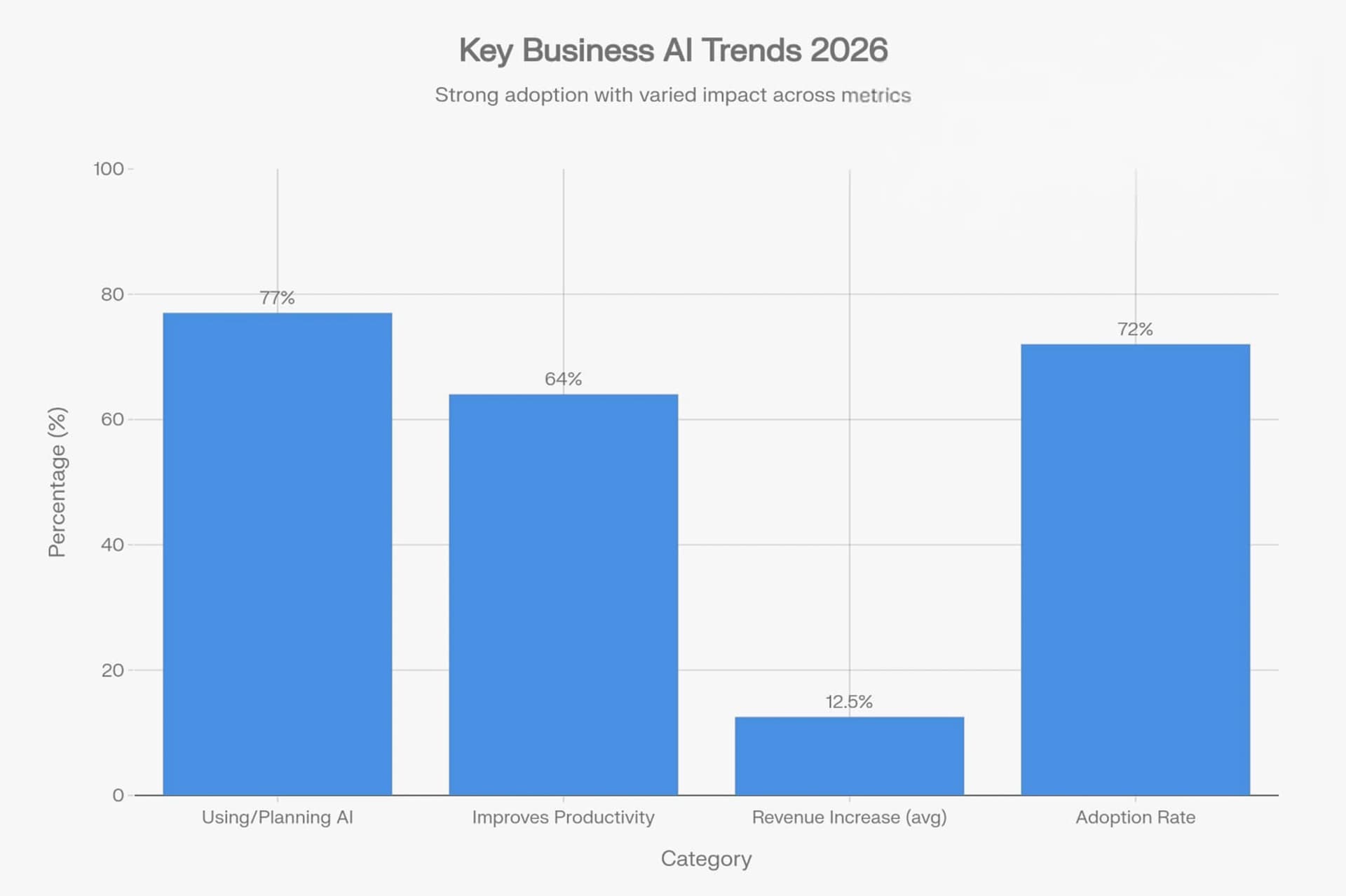
This chart pulls from surveys on how businesses view AI integration. Over 77% of companies use or plan to use it, while 64% expect better output. The workflow automation field grows fast, hitting billions in value soon, thanks to demand for real-time fixes across industries.
Predictive Analytics Powers Smarter Growth
Predictive analytics looks at past data to spot patterns and guess what's next. It helps firms stock right or spot unhappy customers before they leave.
Take retail: Walmart trimmed supply chain costs by 25% with these forecasts. The market for this tech jumps from $10 billion to over $35 billion by 2027, with users seeing 20–25% better operations and 10% revenue bumps.
Core Differences: Why AI Integration Matters
To understand the current landscape, we have to look at how these new systems differ from the tools we used just two years ago.
| Traditional Automation | AI-Integrated Workflows |
|---|---|
| Logic Fixed, rule-based | Adaptive, learning-based |
| Data Handling Structured data only | Structured & Unstructured (images, text, voice) |
| Decision Making Requires human intervention for exceptions | Handles complex exceptions autonomously |
| Scalability Linear; requires more rules for more tasks | Exponential; gets smarter with more data |
| Primary Goal Speed and consistency | Performance enhancement and strategy |
Performance Enhancement Through AI Agents
By 2026, 40% of apps will use task-specific AI agents for multi-step jobs. These agents flag issues and fix routine problems without constant human oversight.
Maintenance teams, for instance, get alerts only for unusual cases, freeing time. In customer service, chat agents manage queries 24/7, cutting response times sharply.
Challenges in AI Workflow Automation
AI integration can be bumpy. It requires clean data shared across systems for good results. Staff might worry about job shifts, but reports indicate roles will evolve towards higher-value work. Upfront costs can be considerable, but payback often comes quickly—in months—for well-established setups.
Steps for AI Integration in Workflows
A plan helps. Focus on high-pain spots like slow approvals or data entry.
- Test small: Pick one department (e.g. sales) to map current steps and add predictive analytics for lead scoring.
- Link tools: Connect existing software for automated data flow; it can reduce errors.
- Train staff: Short training sessions on new systems; firms boost skills via smart learning paths.
- Track metrics: Monitor cost reductions, speed improvements, and output; adjust based on real performance numbers.
- Scale up: Once an area is successful, expand to others like HR or logistics for broader growth.